An overview and celebration of our event on the 23rd at Avalon Marshes...thanks to everyone that came along
- May 23
- 2 min read
Updated: Jun 19
An overview and celebration of our event on the 23rd at Avalon Marshes...thanks to everyone that came along.
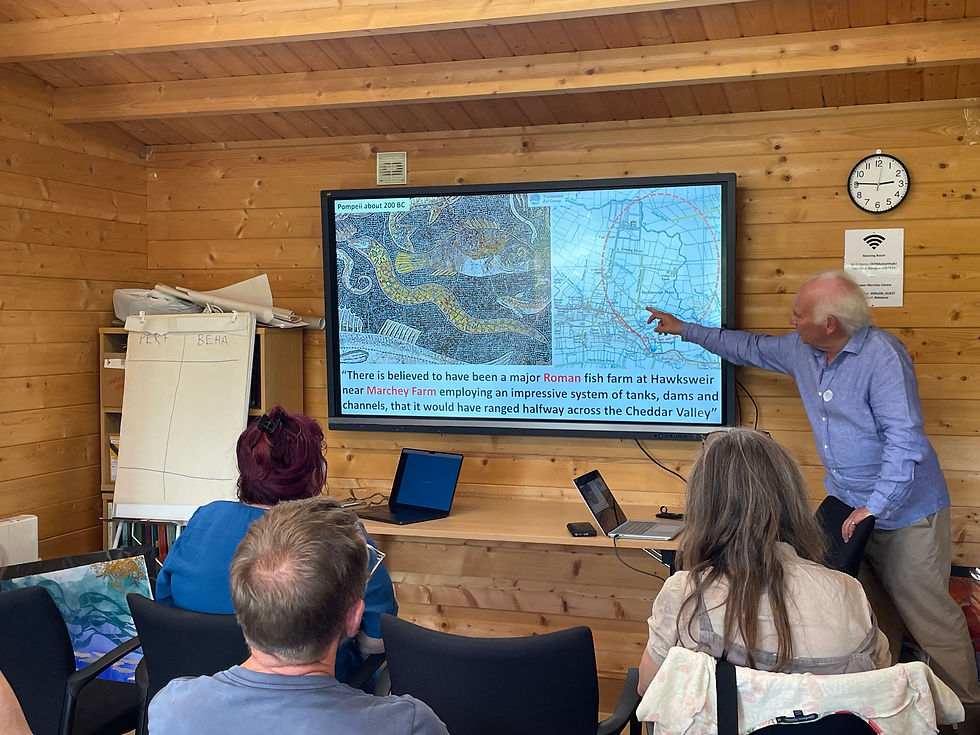
This World Fish Migration Day, we hosted an event which brought issues around river restoration and migratory fish passage to a broader audience.
The approach to river restoration is based on sustained community engagement with eel conservation, with projects including eDNA sampling to assess relative abundance of eels in local ‘rhynes’ and regular engagement with landowners, conservationists, and commercial stakeholders via the Somerset Eel Working Group.
This work has included education and training activities, alongside the revival of traditional skills relevant to waterways such as rush weaving and straw rope making, and SERP was recently recognised by the Campaign to Protect Rural England for the innovative and effective approach. We explored practical, creative, and emotional responses to environmental changes; and heavily managed systems in which environmental objectives need to be balanced with flood risk management requirements, economic constraints, and the interests of the communities they support.
Alex addressed fish passage policy and implementation, focusing on cumulative barrier effects across catchments and the limited effectiveness of current approaches which involve achieving connectivity at system scale. He then turned to more positive case studies involving individuals in New Zealand, Zambia, Brazil, and the United States, who have moved from river obstruction or pollution towards active engagement with restoration through World Fish Migration Day.
Andrew addressed eel trafficking, highlighting enforcement limitations and the persistence of illegal trade within existing regulatory structures, and pointing to fragmented oversight and cross-border supply chains that continue to enable exploitation despite formal protection.
Emelline took an alternative approach, introducing and explaining her ‘eel pilgrimage’ project, then taking her audience on a guided walk from the conference venue along part of the South Drain. The ‘pilgrimage’ was framed as a structured interpretation of a managed drainage landscape from an eel’s perspective, and linked back to her wider conceptual work on movement, loss, and the meaning from landscape and inter-species experiences.
The guidebook for the eel pilgrimage will be published shortly and is designed as a visually compelling and saleable object and will feature artwork by Somerset painter-printmaker Julia Manning, whose presentation on her Decline of Eels woodblock print cycle formed part of the wider programme during the event.
The lunchtime slot included rush weaving to create cordage for the organisation next door at Avalon Archaeology thank you to Julia Bedofrd for her tutoring and expertise, and Natural England for giving us access to the reserve and the rooms for the presentations.
See you all again soon!




Comments